100 DAYS & 3,000 NAUTICAL MILES

AUGUST 31-SEPTEMBER 1

As we got closer to home we realized how fabulous this trip had been, how much we had experienced and seen and how much we had grown. Although taking our boat to Alaska had been on our bucket list for years, as it got closer we vacillated back and forth about going. It involved so many hours of travel, so why would we do that when we have such beautiful cruising grounds close to home? There was so much to do to get the boat mechanically ready for such an extended voyage which was not only time-consuming but expensive. The cost of diesel to travel over 3,000 miles is ridiculous! We weren’t sure how comfortable we’d be finding places to anchor in remote bays where there weren’t any other boats. What if we had an emergency in one of those bays where there is no chance of cell phone coverage and a strong possibility that the VHF radio wouldn’t work? Could we really just leave our kids and grandkids for 3 months? What about our remodel that wasn’t going to be done before we were scheduled to leave? After seeing one another an average of only 6 hours a day for the past 40 years, how would David & I handle 24/7 for 2-3 months in a relatively small space?

So we owe a big THANK YOU to those people who encouraged us to take advantage of this wonderful opportunity, for without them we most likely would not have gone: Jason worked every angle to encourage us to “JUST DO IT!”; Tom has been after us for at least 6 years to take the trip; Steve & Kim were kind enough to share not only their favorite places, but showed us where we could hide in bad weather, and printed up all sorts of incredibly useful information; Dick & Maureen showed us their routes, gave us lots of ideas about where to go and what to make sure to see; Len knew we would regret it if we didn’t do it; and Dave & Eddie Lee devoted an entire day reviewing routes, charts and fishing places with us. Without these people, this trip never would have happened. THANK YOU ALL!

We spent our last night in Hunter Bay, Lopez Island, one of our favorite places over the years. We laughed when we put the anchor down because we had forgotten that it is only 17′ deep there and we’ve been anchoring in 75-100 feet. What a difference!

We arose our last morning to an absolutely stunning sunrise. The moon was still up, reflecting in the water, and it was totally still and quiet except of the occasional snorting of the seals. What a great way to end the trip!

Reflecting moon in sunrise in Hunter Bay
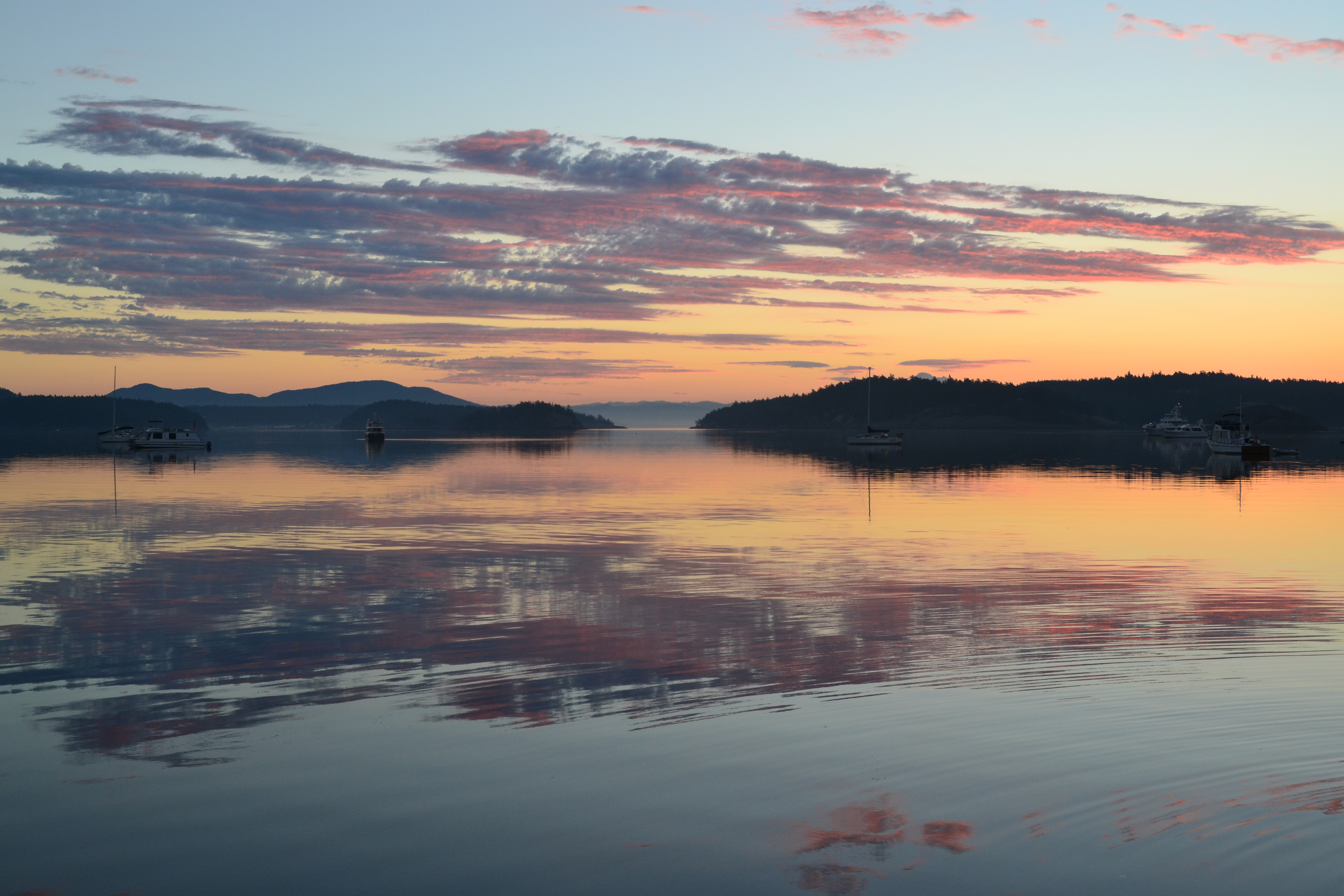
Reflecting moon in sunrise in Hunter Bay

Lopez Pass

Lopez Pass

The closer we got to Seattle the busier it became: there were quite a few boats in the San Juan Islands enjoying the Labor Day weekend; too many boats milling around vying for spots to get into the Locks; Lake Union was absolutely loaded with boats, amphibious ducks, float planes, paddle boarders and kayakers and there was lots of noisy traffic on the bridges. It seemed like total chaos to us. We’ve been on “island time” and we were now in the “real” world and it didn’t seem “right”.

We’ve had an absolutely amazing trip, far beyond our expectations. We’ve seen just a small portion of one of the most beautiful areas of our country; we now have increased confidence in our boat and our own boating skills; have realized that now that we aren’t “working” we’re loving meeting people while we’re boating because we aren’t exhausted and looking for a complete get-away; and the best news of all is that we thoroughly enjoyed one another almost 24/7 which of course bods well for the next two decades. We are looking forward to our next boating adventure…wherever it may be.

Thanks for coming with us to Alaska!

Happy

Happy

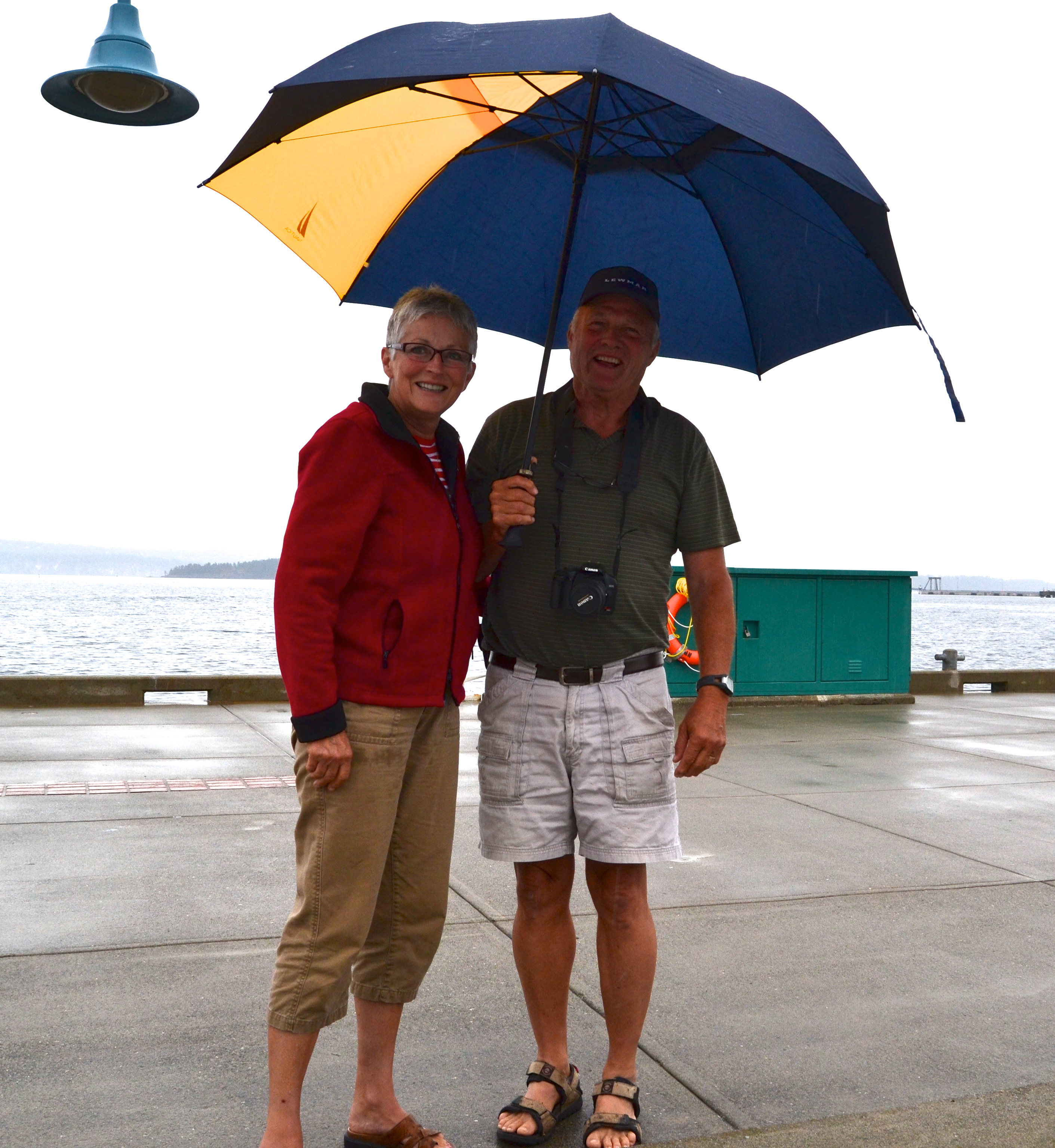
The Captain & FIrst Mate

The Captain & FIrst Mate
WE’RE GETTING CLOSE…

AUGUST 24-30

Our last two nights in British Columbia were spent in Nanaimo. We can’t help but think back to the rainy and windy days we spent here at the beginning of the trip when we had no idea about all the exciting things that were in store for us.

As we were nearing Nanaimo we were hailed on the radio by good friends and neighbors in Arizona who were coming into the harbor about the same time we were, so we spent a lovely evening with them eating fish tacos and telling stories about our travels.

Daryl & Christine

Daryl & Christine

The next day there was a heron 2 feet from the boat…quite a sight. I love these birds and their prehistoric sounds.

Great Blue Heron

Great Blue Heron

Taking Flight

Taking Flight

We cleared customs in Point Roberts and spent 2 days at the Marina so we could visit with two sets of friends who both live in the area and each of them joined us on the boat for dinner on different evenings.

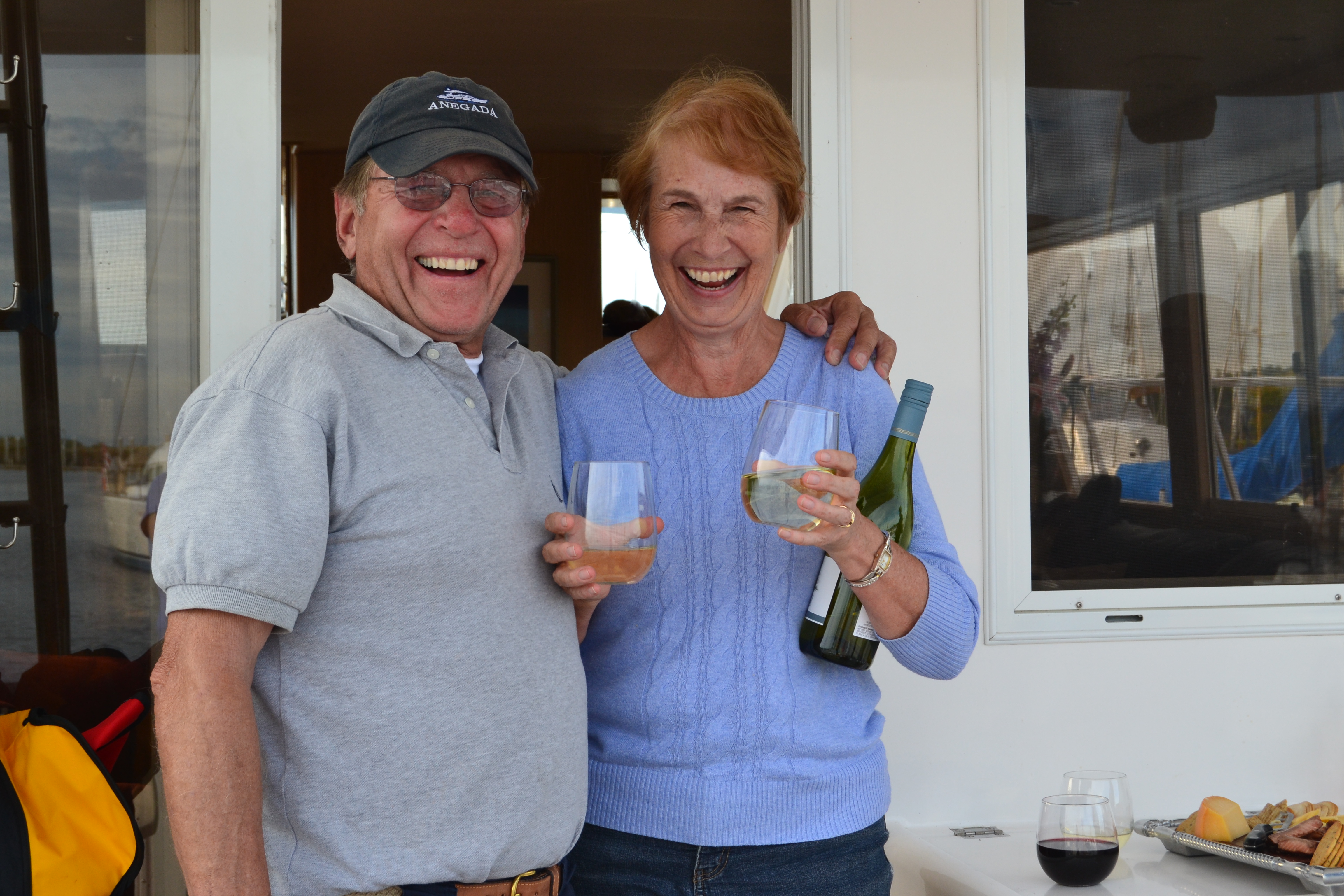
DSC_0983 David & Gillian: the wine tasters

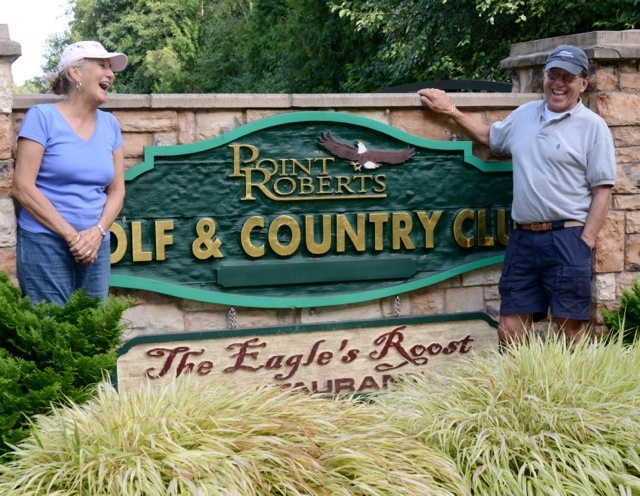
The second day we were there we played golf at the Point Roberts Golf and Country Club- our first golf outing from the boat. It was such fun!

Point Roberts Golf & CC

Point Roberts Golf & CC

TRANSITIONING

AUG 16-23

As we continued south we spent close to a week in The Broughtons, B.C. revisiting Sullivan, Kwatsi and Echo Bays (last visited in 2011), in addition to Lagoon Cove where we spent the 5th night on our way up to Alaska. My, that seems so long ago! We are getting used to this lifestyle and it is hard to remember how new everything was just three months ago. We frankly had forgotten how big and beautiful the mountains in the Broughtons are and we are glad to have a little bit of time to spend here.

We continue to enjoy meeting new people every place we stop. We’ve made new friends and strengthened our ties with “old” friends. We’ll miss the casual boating camaraderie when the trip is over.

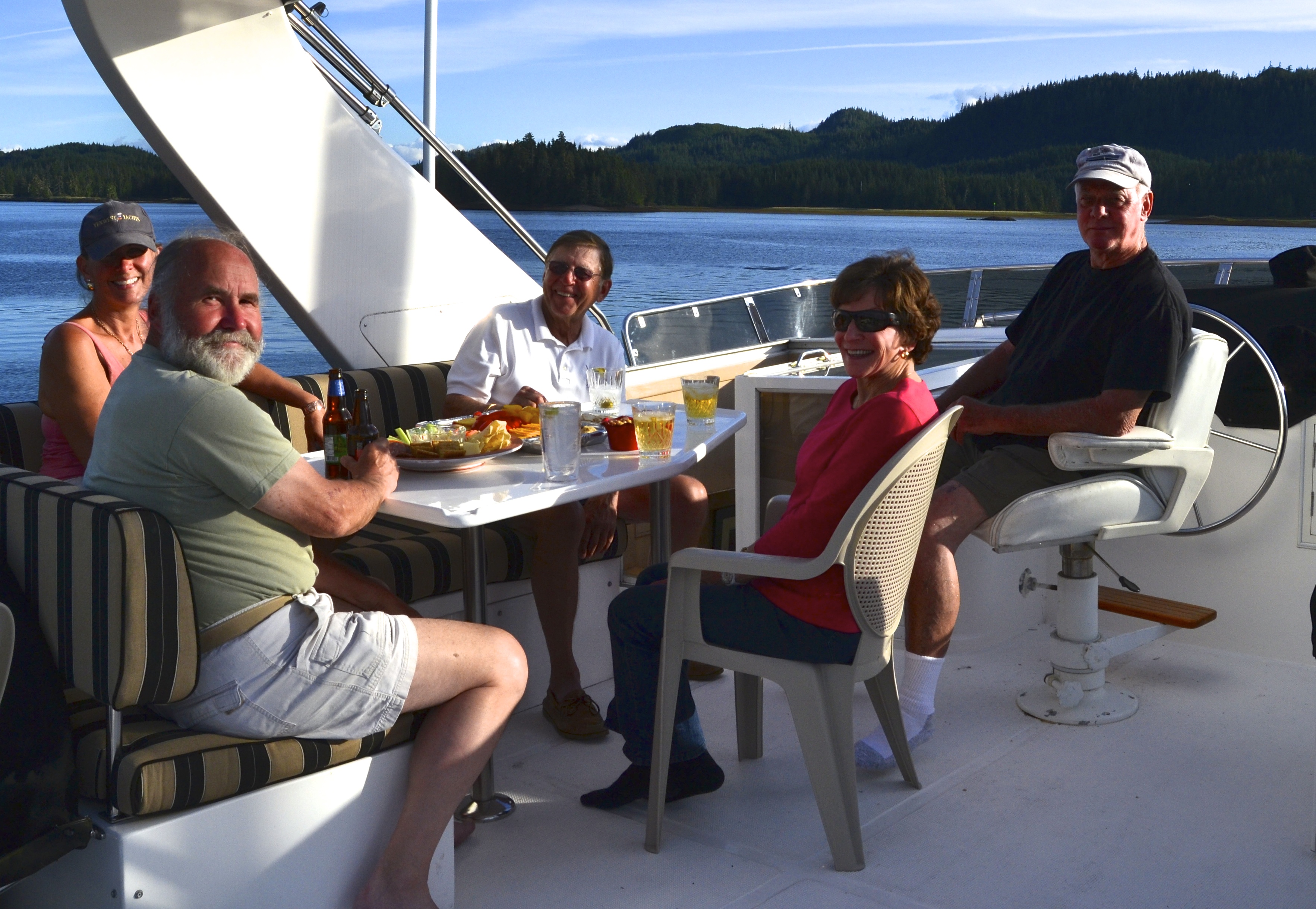
Friends: old and new

Friends: old and new

Sunset & seagulls: Pierre's Echo Bay

Sunset & seagulls: Pierre’s Echo Bay

Tribune Channel on the way to Kwatsi Bay.  The mountains aren't as jagged as Alaska's but are big and so beautiful.

Tribune Channel on the way to Kwatsi Bay. The mountains aren’t as jagged as Alaska’s but big and beautiful.

Our last stop as we left the Broughtons was Blind Channel Marina. It’s a beautifully maintained marina with a great restaurant and good hiking. When I got up at 6:00 the morning we were leaving there was a wonderful layer of fog hanging over the water and I grabbed my camera to catch some of the beauty. It was fun to see 4 other people doing the same thing over the course of the next hour. The stillness and quiet were breathtaking. I will miss this…

Morning fog over Blind Bay Marina

Morning fog over Blind Bay Marina

So still and quiet

So still and quiet

The beauty takes your breath away

The beauty almost takes your breath away

Golden Great Blue Heron

Golden Great Blue Heron

WHAT DO YOU DO ALL DAY?!

August 16, 2013


We’ve been asked how we can spend so much time on the boat and what in heaven’s name do we do all day. On the days that we aren’t traveling, we may walk and explore the area; fish; crab; shrimp; meet and talk to people; do routine cleaning & maintainance; research new areas we want to visit; plan the navigation for our next journey; read or maybe even nap!  

Travel days are much different, especially if we’re crossing a “challenging” body of water such as rounding Cape Caution in the Queen Charlotte Strait where in such a large body of water, high winds with opposing tides can cause high seas, making the crossing quite uncomfortable to say the least. So the day before a scheduled departure we have checked the weather repeatedly; have our paper and electronic charts all ready; I’ve checked the tides and currents and estimated how long it will take us and David has checked all the mechanical aspects of the boat (is the Amazing Goop still working?).  I store anything that can fly around in heavy weather, which includes stuffing my down parka and fleece jackets in our wine glass and dish cupboards and locking the refrigerator doors (One year in rough seas the refrigerator door flew open and we had broken beer bottles and beer flying all over the pilot house). These big crossings tend to be longer travel days, and because the wind generally picks up in the afternoons we plan an early departure unless that means we will be fighting an opposing tide or that we will not arrive at a “Narrows” where we need to go through at a specific time for “slack water”.

On Aug 16th we hoped to be able to go around Cape Caution so we were up at 5:00 to listen to the marine weather broadcasts. It was raining and windy and we were pretty sure we wouldn’t be going. The night before the weather was rather “iffy” i.e. the predicted winds and seas were higher than we are comfortable with. Because wi-fi is close to non-existent in the wilderness we get the weather by listening to our VHF radio for the marine forecast which can take anywhere from 15-30 minutes as it covers many geographic areas and includes information on barometric readings, sea conditions at specific buoys, wind forecasts for each area and predicted wave height. The reception is frequently poor so if it cuts in and out we need to listen to it 2-3 times before we hear the information we need. We turn on and check all our instruments (navigation computers, radar, VHF, depth sounder, bow & stern thrusters etc., and the all-important coffee pot.  If the weather looks OK we are usually ready to unplug the power cord from the dock or pull up the anchor and depart an hour after we get up.  

We decided we’d try to cross and left the dock at Duncanby Landing at 6:20 AM shortly after the sun was up.  It was raining with only fair visibility which dictated that both of us be vigilantly watching ahead for other boats and logs in the water and to ensure we’re on the course we’ve planned.  We use two computers with the course we are following and I stand beside David (who as Captain gets to sit down all day, by the way) with my pile of paper charts. I move a marker along as we travel so I know exactly where we are in case we have an electrical problem and our computers suddenly go blank, and I mark our location on the chart in pencil at least every 1/2 hour with the time and coordinates.  Even when you are very familiar with an area, when you are on the water, it can be extremely difficult to figure out where you are if you are not monitoring and making frequent visual checks.

We are constantly looking for navigation aids (buoys, lighthouses) which are shown on the charts. These identify channels, reefs, rocks etc. Visually seeing them assures us that we are where we think we are. Especially in fog, we can’t afford to make a mistake. On this particular day the fog got thicker as we went along which dictated constant vigilance of the radar and searching out the window.  Our radar may show something is in front of us but in rough seas it can be a big wave and in fog we may never actually see the boat except on the radar.  Stress.

We went around Cape Caution 2 1/2 hours after departure under calm seas which was a real blessing.  The visibility was getting worse though and by 9:45 we were tired of it all.  An hour later the visibility got better but the wind was kicking up and the seas getting choppy along with some sea swells. Never a dull moment. By 1:30 we rounded James Point into the Broughton Archipelago and suddenly the waters were calm, the sun came out and we were in familiar territory. Yes! We arrived at Sullivan Bay at 2:30, tied up to the dock, and exhausted, I laid down for a quick nap which ended up lasting two hours…apparently I was tired and this was only an 8 hour day!

In each marina in The Broughtons, people meet at 5:00pm at a specified place to meet other boaters, share stories and hear about each others travels. So well rested, we grabbed a drink and an appetizer and headed off to Happy Hour where we met some very fun people. What a nice tradition.

Our friends aboard Stella Maris as we left to make the journey

Our friends aboard Stella Maris as we left to make the journey

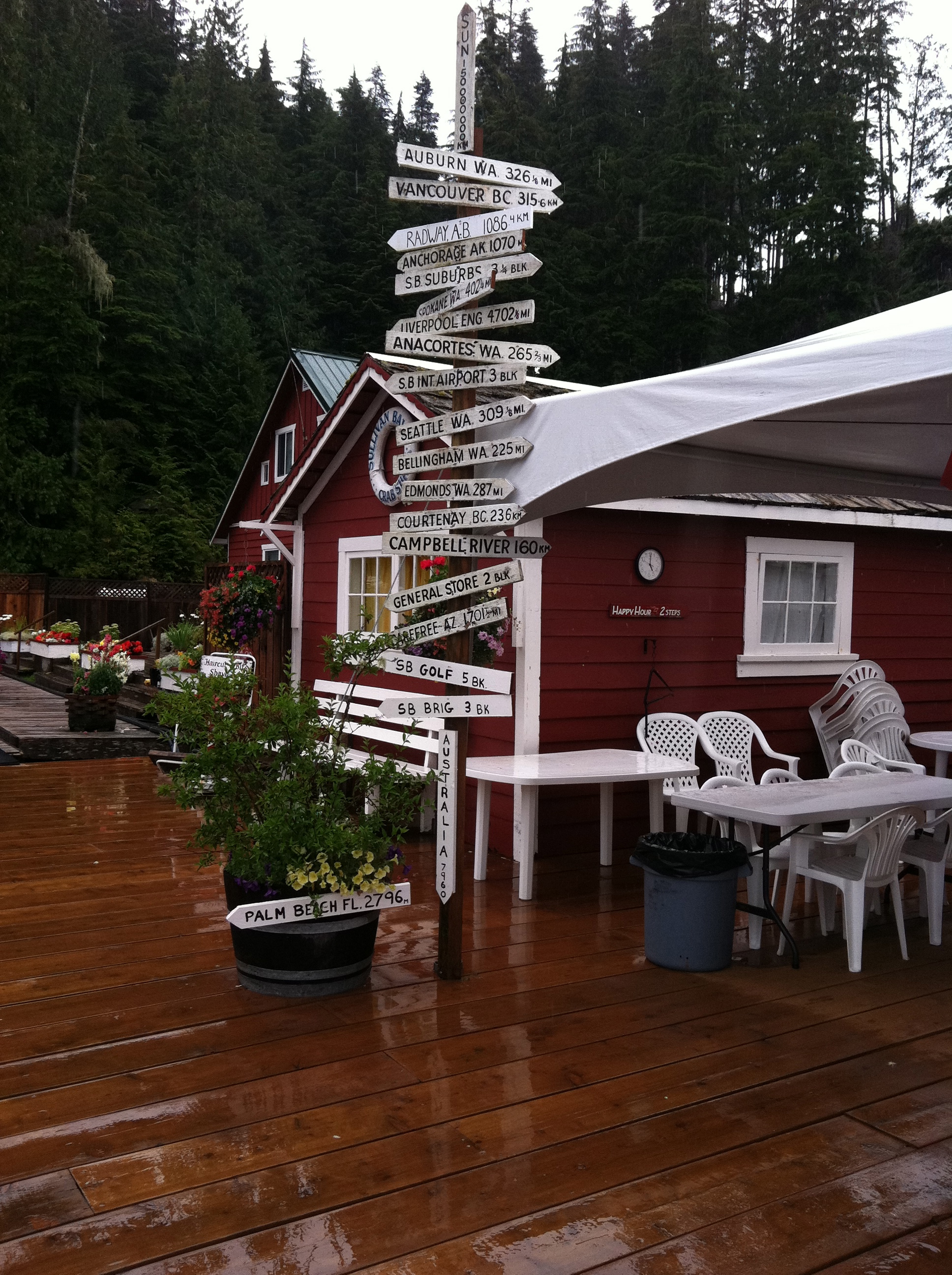
Sullivan Bay

Sullivan Bay

SAYING GOODBYE

August 13, 2013

As we were heading down “The Ditch” (Granville Channel, British Columbia) today I was a little melancholy as Alaska was behind us and we were now leaving the “bigness” of Northern British Columbia and the prolific whales I have so loved. Just as we were about out of “The Ditch” I spotted a humpback who lifted her fluke up three times.  What a nice “goodbye”.

DSC_0467

 Twenty minutes later we had Dall porpoises give us a quick visit as they played in and out of our bow wake for about a mile. As I looked back from the stern of the boat I felt so thankful for this one last visit from these wonderful creatures, and even under the cloudy skies this is such a beautiful place.

Leaving The Ditch

Leaving The Ditch


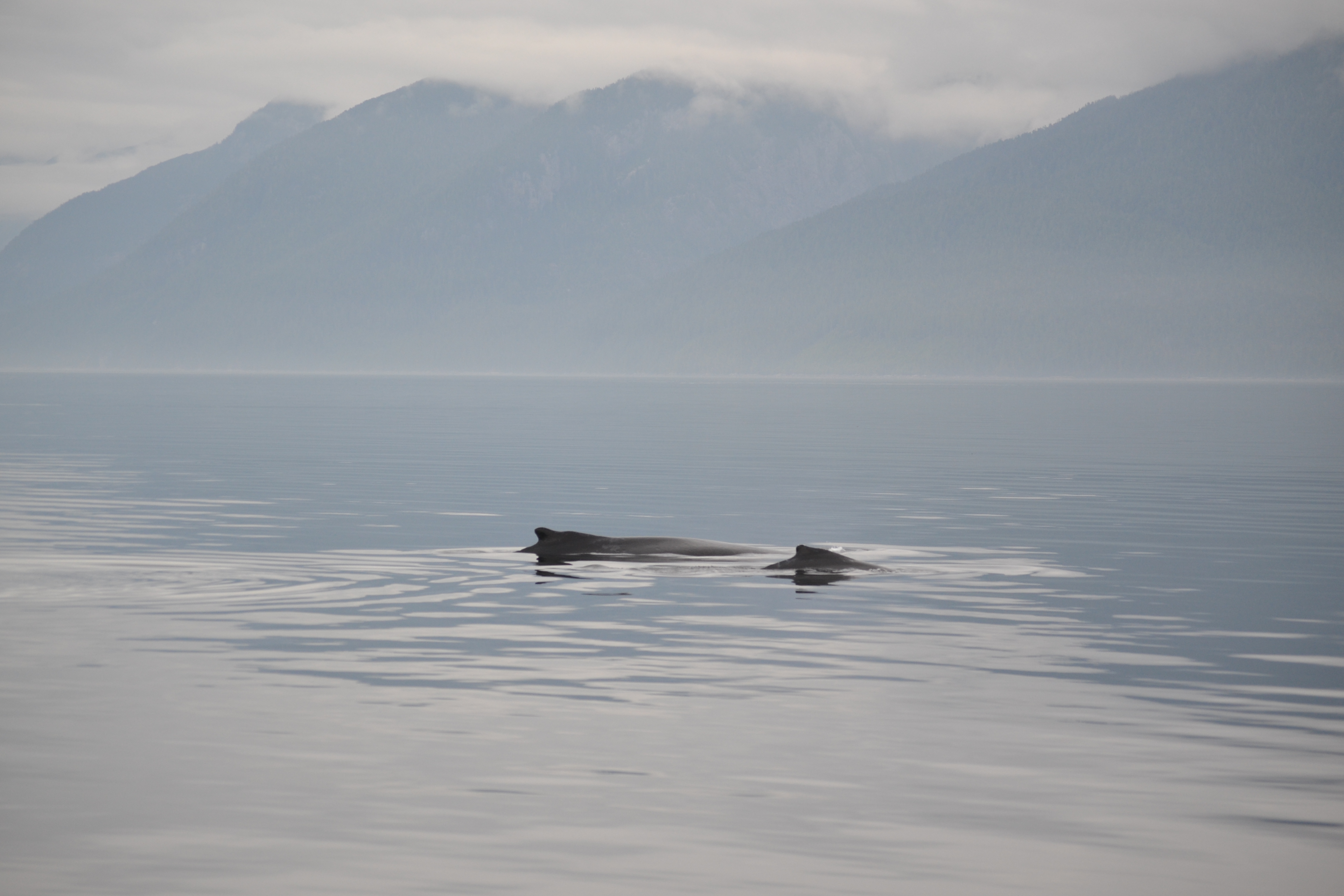
Two hours later as we were entering Wight Sound into Whale Channel we saw a mother humpback with her calf moving gracefully through the water together.  They were cruising side by side ever so slowly and silently.

Mom and her baby

Mom and her baby

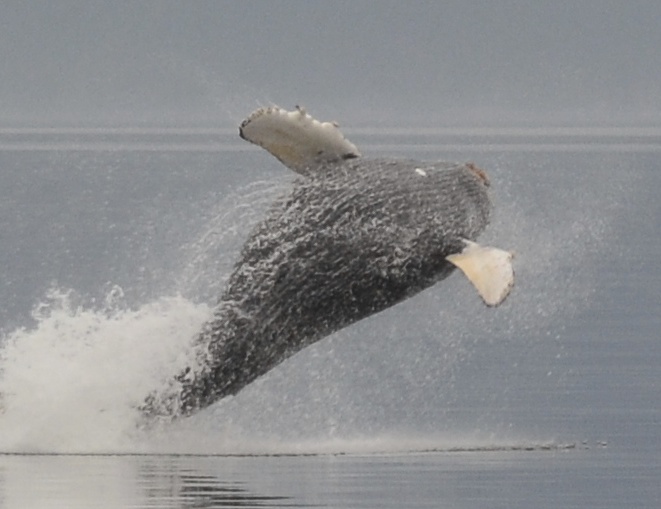
All of a sudden the whales start breaching!  Then another whale joins in and he starts breaching.  OMG! Both big whales are breaching alternately, each one about eight times!   We are absolutely stunned.  

Breaching Mom. Notice there are almost no markings on her fins

Breaching Mom. Notice there are almost no markings on her fins

Breaching whale #2.  Lots of markings on his fins.

Breaching whale #2. Lots of markings on his fins.

What a show-off.  He is having so much fun!

What a show-off. He is having so much fun!

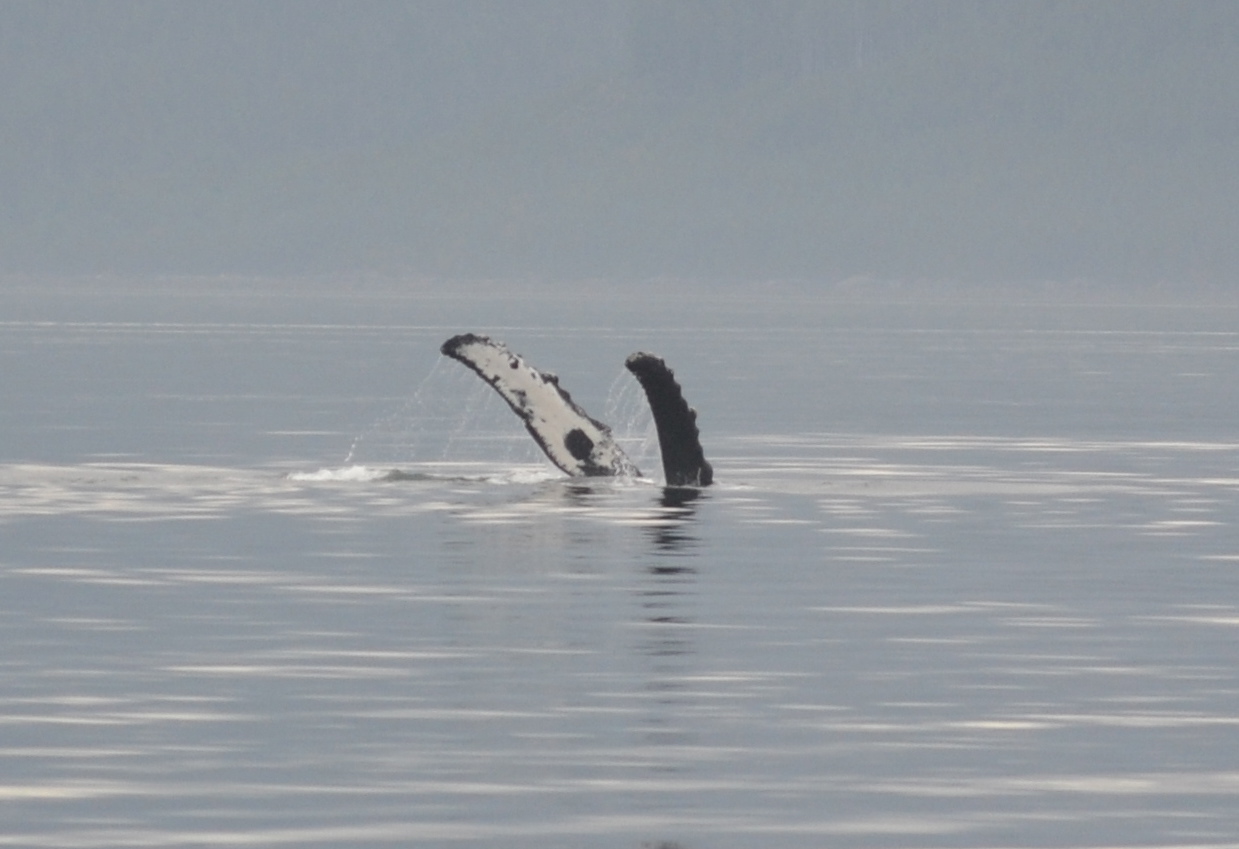
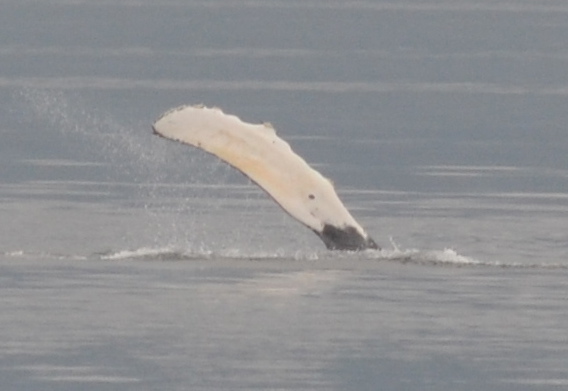
Then they start finn slapping and it is SO loud.  It sounds like gun shots going off. I’m sure it can be heard for miles.  After 15 minutes of finn slapping (no exaggeration as I took 400 pictures and can see the time and sequence on my camera) they start making a very different noise after “blowing”. It is a sound I can only describe as singing.  It is different from anything else we have ever heard.  We wonder if they are communicating with one another socially or if this is part of their communication around feeding.  Whatever it is it is absolutely beautiful!  

Mom finn slapping

Whale #2 finn slapping (lots of markings on his fins)

Mom (almost no markings on fins) fin slapping.

Mom (almost no markings
on fins) fin slapping.

Next they start tail lobbing for about 5 minutes, for heaven’s sake!  What an unbelievable experience!  Then suddenly it is quiet and Mom and her baby surface again side by side very near our boat, lift their flukes and slowly and gracefully disappear.  It has been a full hour “show” and we cannot believe we have received such a gift.  I feel exhausted, emotional, and close to tears.  It is unbelievable to me that we have witnessed this.  Talk about being in the right place at the right time.  WOW.

Mom and baby come close to the boat to say goodbye

Mom and baby come close to the boat to say goodbye

MAJOR MECHANICAL

AUGUST 8, 2013

Our last hurrah in Alaska was to be the circumnavigation of the Behm Canal (it surrounds Ketchikan) ending at the beautiful Misty Fjords. While at anchor in remote Yes Bay (our first stop in the circumnavigation) David was doing normal maintainance in the engine room when he discovered a huge oil leak (2-3 quarts) from the starboard engine. This rendered the engine unusable…a rather major issue. David talked to his Seattle engine mechanic who said we needed to get the parts flown into Ketchikan from the U.S. (a 3-5 day process here in Alaska for “overnight” delivery) and a mechanic flown in from Juneau to do the work. It will be a full day repair as the blower needs to be removed first: translation: $$$$$. David is the kind of guy who will drive across town to save $5, so this does not go over well at all.

After a few cocktails David’s creative juices start flowing and back to the engine room he goes. An hour later he comes out with a grin on his face much like that of a 5-year-old boy who just figured out how to fix his broken bicycle all by himself. He proclaims “I cleaned everything up, used a dental tool to get the broken part back in place and made a patch that might get us back to Ketchikan! I slathered Amazing Goop all around the broken part that gave way. We’ll know tomorrow if it will work.” Say what?

Tomorrow comes and we pull the anchor and start “limping” back to Ketchikan on one engine. After about an hour we turn on the starboard engine and wait. Tick tock tick tock…low and behold the Amazing Goop seems to be working! David gets his mechanic back on the phone and tells him what he’s done. The mechanic’s response: “Brilliant! Do you want a job?”. I will never stop being amazed at this man’s ingenuity. Let’s hear it for all those summers spent on the family farm in North Dakota where he learned to figure out how to fix anything that was broken. That’s my Captain!

Captain celebrating the success of Amazing Goop.

Captain celebrating the success of Amazing Goop.

ALASKAN CULTURE

We love the surprises we’ve had as we’ve traveled around Alaska.

After we’ve had guests aboard we take our sheets and towels to a laundry mat instead of doing them in the small machines aboard. We returned from the laundry mat in Auk Bay about 8:30pm one evening to discover that three huge fishing boats had tied up to our boat. This would never happen in Seattle, where you would not even step one foot aboard another person’s boat without asking permission, no less tie up to it! We were so surprised! Each crew-member from each boat had to walk back and forth across our cockpit and hop over the side of our boat to get on and off their boats. But this is Alaska and this is fishing country and these guys had been out fishing 24 hours a day for three days. So we embraced the culture, made some new friends, learned a heck of a lot more about Purse Seiners, heard some great stories and were served an absolutely delicious French toast and bacon breakfast the next morning! THIS is Alaska.

Surprise!  We have neighbors!

Surprise! We have neighbors!

We're served a delicious  breakfast from the galley of The Crimson Beauty

We’re served a delicious breakfast from the galley of The Crimson Beauty

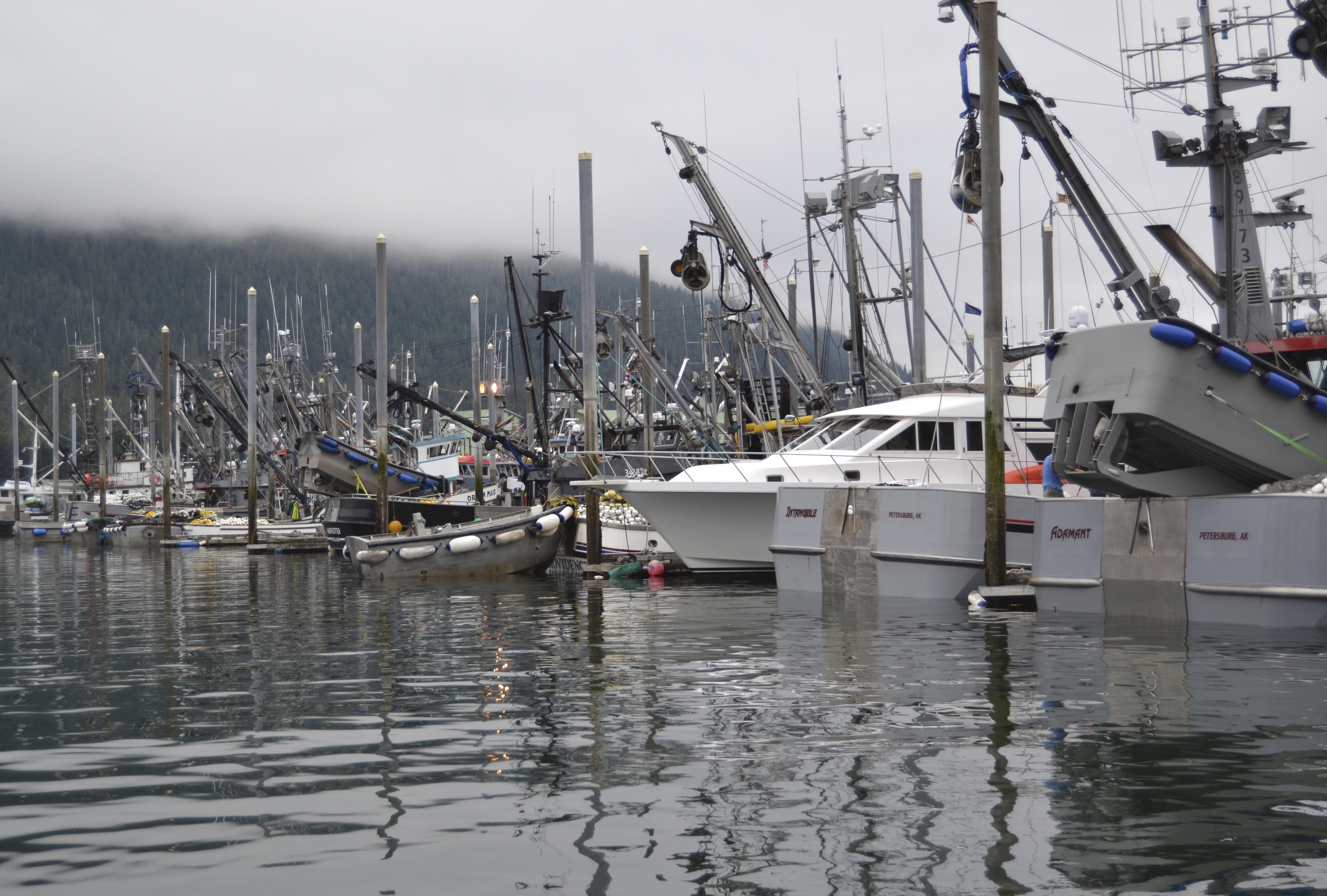
Commercial fishermen in Alaska can only fish on specific days in specific areas, and they don’t know when that will be until a day or two before the “opening”. What a different way to live! When we arrived in Petersburg heading south, we were one of only four boats on the dock as there had been an “opening” for the Purse Seiners. The night before we left the fishing slot closed so the boats started returning. They came into the marina throughout the night and when we awoke the next morning the docks were plum full and we were dwarfed by all these beautiful working boats. We were now one of only three pleasure boats amongst a sea of huge Purse Seiners. We looked VERY out-of-place and most definitely in the minority. As we sat and sipped our coffee and watched them checking their nets and working all around us we were delighted that they were as hospitable and friendly as they could be. That’s the Alaskan way.

In the minority

In the minority

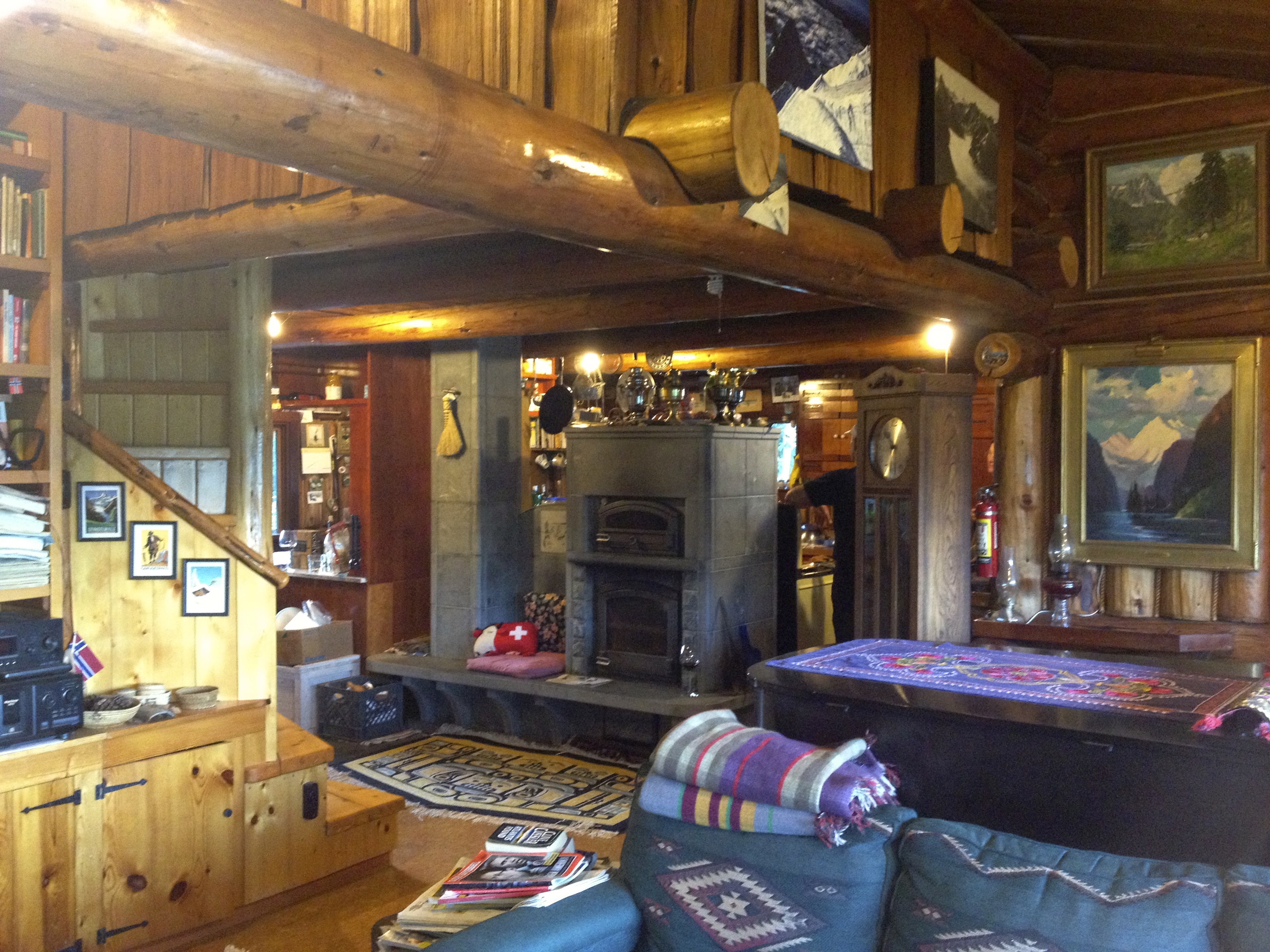
A friend of ours in Seattle suggested we call a friend of his when we were in Petersburg as he thought we’d all get along well. That was an understatement. Doug and Martina live on Mitcof Island, right across Wrangell Narrows, about a half mile from the marina where we were docked in Petersburg. Doug was a dentist in Seattle. The sign with a tooth painted on it in Pike Place Market in the 80’s that said “DENTIST”, was Doug’s. We took our dinghy over to their property which is 10+ absolutely beautiful acres. There’s an old log cabin that they’ve turned into a beautiful home; a net shed (a local term for a shed where fisherman store their nets); guest cabin; a huge vegetable garden; and a sauna “house”. They use well water for everything except drinking, generate solar power and are pretty darn self-sufficient. Doug, like David, can fix anything. He’s even restored a 100-year-old working tug, The Katahdin that he brings to Seattle annually. The evening was glorious. There were two other delightful and very interesting couples from Austria and Germany (Martina is German) who had just completed a 165 mile kayak trip down the incredible Stikine River. We learned more about the wilderness, local politics, the educational system in Austria and fishing. Half of the conversation was in German. Near the end of dinner Doug recited poetry by Robert Service and the evening ended with Doug playing Chopin and Bach on his grand piano. As we motored back to the harbor in the dinghy in the dark we marveled at what a unique and wonderful evening we had just experienced. Alaska…the land of wonderful surprises.

Arriving Mitcof Island by dinghy, which was then pulled out to Doug's buoy while we  played ashore.

Arriving Mitcof Island by dinghy, which was then pulled out to Doug’s buoy while we played ashore.

"Backyard" view from Doug & Martina's house

“Backyard” view from Doug & Martina’s house

Looking towards Petersburg from Doug & Martina's beach...wow!

Looking towards Petersburg from Doug & Martina’s beach…wow!

Inside the log "cabin"

Inside the log “cabin”

As we were returning to our boat in Wrangell Harbor one evening, a young boy on a small fishing boat called out “Hey! Do you want some fish? Do you want some fish?” William and his Dad had been out fishing and had caught more halibut than their family could eat and they wanted to know if we wanted any. We said “Sure, how much is it?” “Nothing.” “Nothing?” “Nothing! We have more than we can use and we just like to share”. We certainly weren’t expecting that. That’s Alaska and we love it.

William & his Dad - gifting us their halibut

William & his Dad – gifting us their halibut

STELLER SEA LIONS and BREACHING & SPYHOPPING WHALES

JULY 30-31

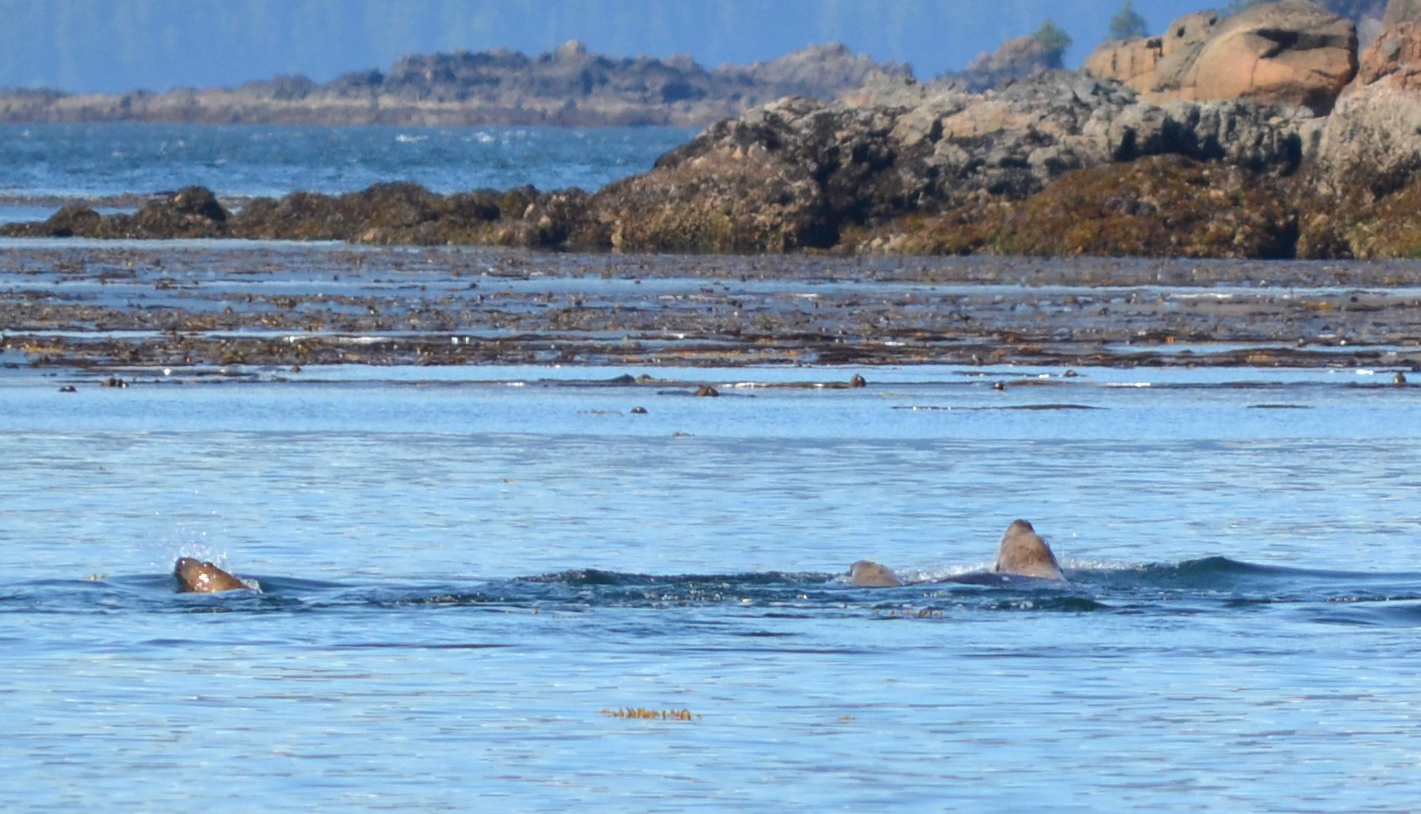
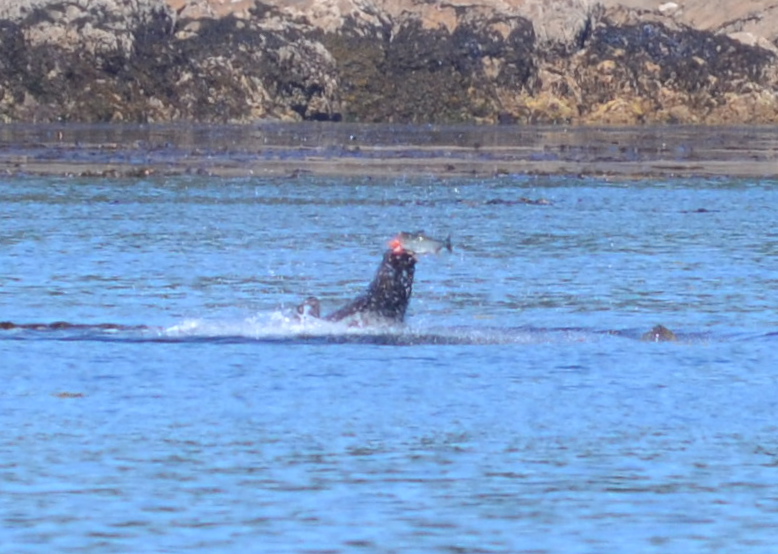
On our way from Warm Springs Bay to Petersburg we stopped to fish and came across a group of 5-7 Steller Sea Lions who were feeding along the coast. It reminded us of the bubble netting that whales do, as the sea lions were in a group and went into an absolute feeding frenzy after circling around and stirring up fish. I took over 500 photos but unfortunately none of them really captured what we saw… but I’ve added a few anyway. The average male Steller sea lion is 9′ and weighs 1500 pounds. The average female is 7′ and 600 pounds. They don’t bark like other sea lions, but instead growl and roar- it’s quite a strange noise actually.

Steller Sea Lions starting their feeding frenzy

Steller Sea Lions starting their feeding frenzy

Success!

Success! Can you see the fish in his mouth?

This must be a male...that's his tail way to the right!

This must be a male…that’s the end of his tail way to the right!

As we continued down Frederick sound we came across 3 humpbacks who breached 4 times! I wasn’t quite lucky enough to catch them in their full breach, but it was an unbelievable sight. It’s not known why humpbacks breach but it might be to dislodge barnacles from their skin, to communicate with one another, or just to play. Sometimes they apparently start to breach in response to a change in the weather. I like to think these whales were joyfully playing. In a typical breach, the whale shoots out of the water, spins in the air and lands on its back.

Breaching Humpback

Breaching Humpback

The spin of the breach

The spin of the breach

Here’s a new one on me… just as a submarine raises its periscope to look around, humpbacks apparently take an occasional peek above sea level in what is referred to as Spyhopping. They lift the top third of their body (just past the eyes) out of the water and may shoot up 10 to 12 feet, sometimes spinning around to get a good look before sliding gracefully back into the water. What a great way to navigate! Those two two dark areas at the top of his head are his blow holes, the equivalent of nostrils on top of its head.

Spyhopping

Spyhopping

BARANOF ISLAND: APPLETON COVE TO WARM SPRINGS

July 27-29

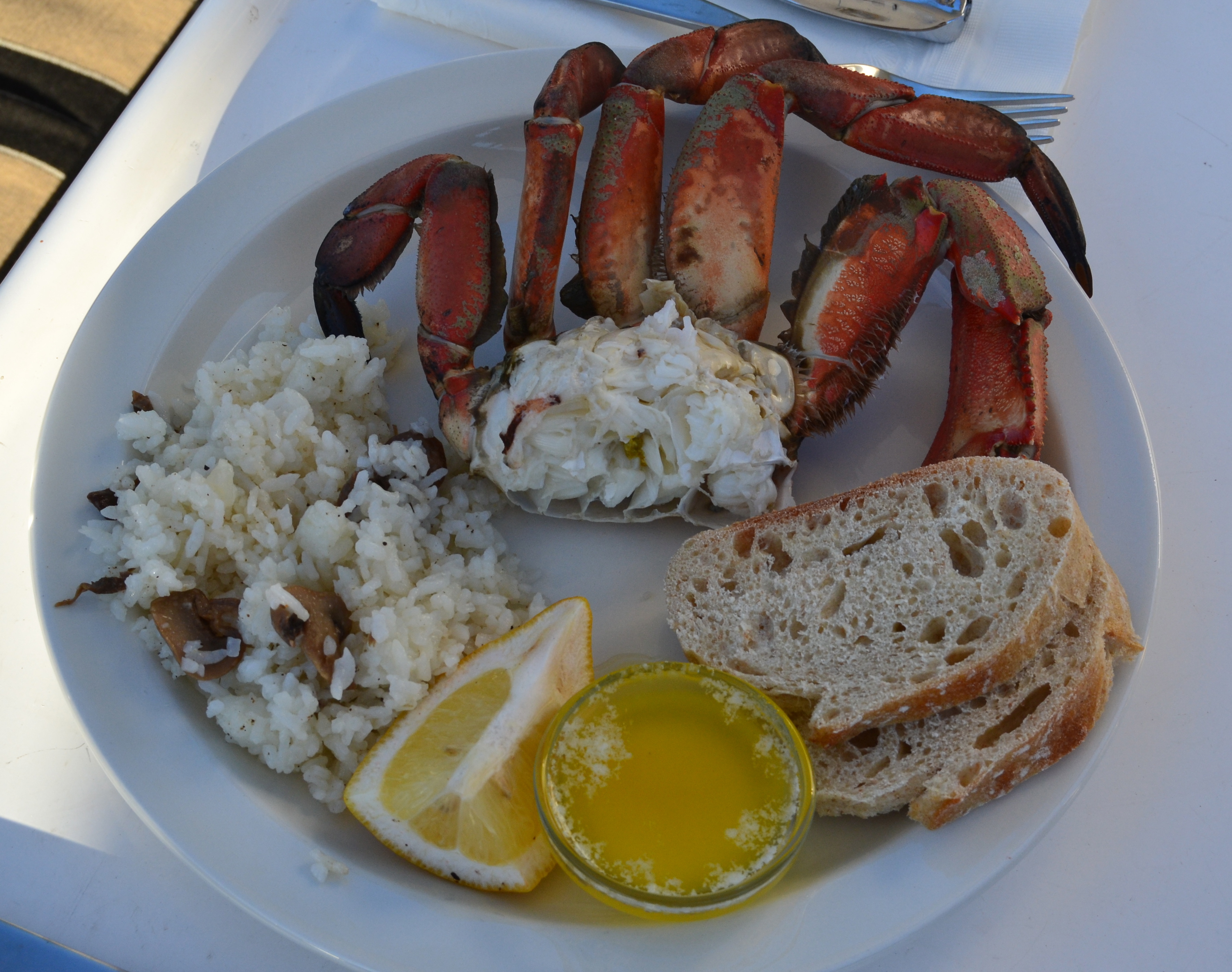
July 27: The trip from Sitka through Sergius Narrows and Peril Strait (don’t you love the name?) is beautiful and we continue to marvel at how few boats we see. Appleton Cove is a good size cove completely surrounded by beautiful low mountains. If it were in the San Juan Islands there would so many other boats, but here we are, alone…it’s amazing. We drop our crab trap, enjoy a quiet evening and wake up to a calm, sunny morning with amazing reflections in the water. It is so peaceful and quiet except for the sound of birds and fish jumping. It’s warm enough at 7:00 to enjoy coffee outside in the quiet. We harvest two nice sized Dungeness Crab before we leave which we’ll enjoy for dinner.

Morning reflections, Appleton Cove

Morning reflections, Appleton Cove

Anegada in Appleton Cove

Anegada in Appleton Cove

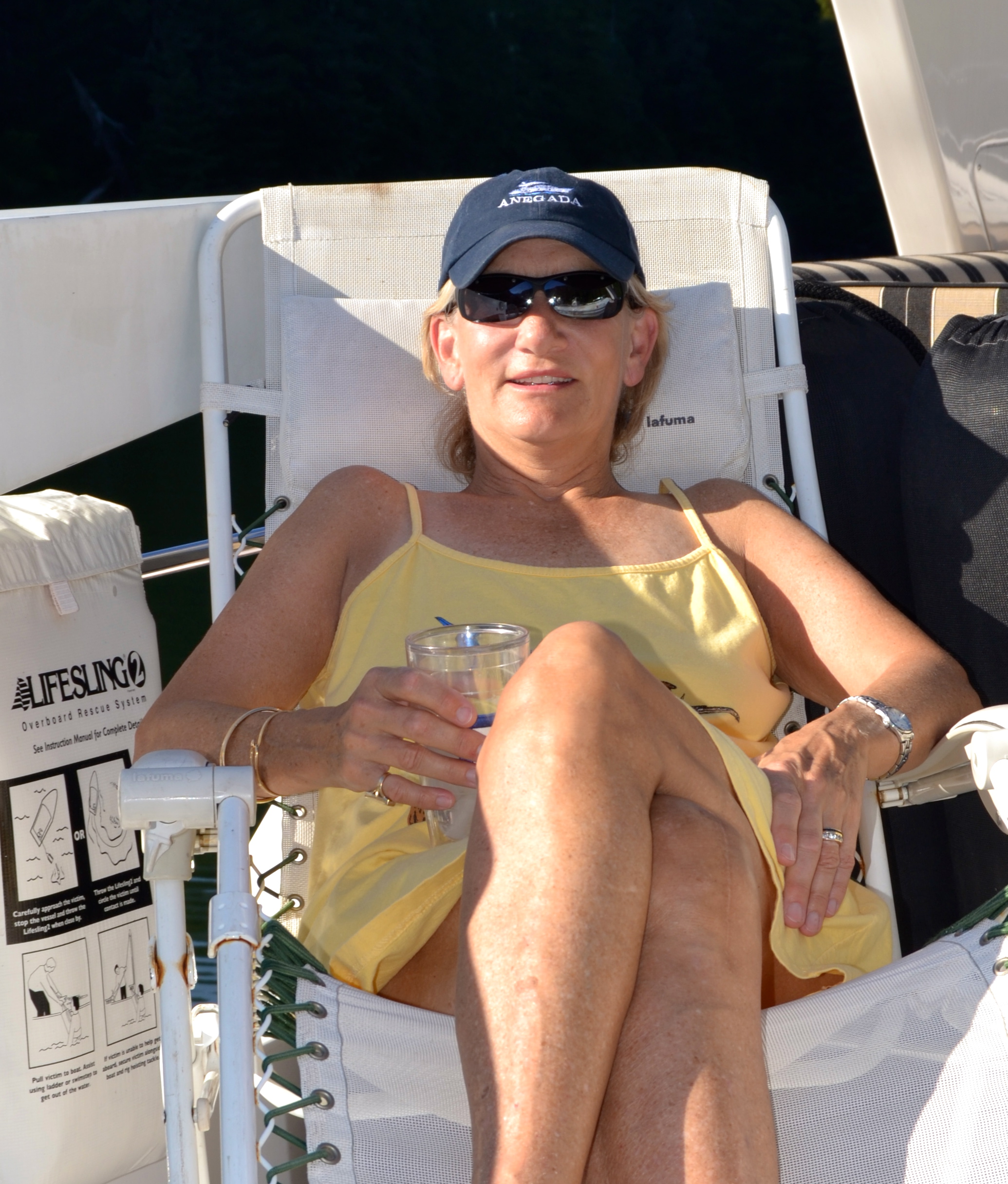
July 28: The trip down Chatham Strait is outrageously gorgeous and warm. Is this really Alaska? We are on the flybridge in tank tops and see 7 whales on our way to Baranof Warm Springs. On our way into Warm Springs we turn into a cove and it is one of the most beautiful places we have ever seen. We are again, totally alone, and surrounded by extremely high snow peaked mountains with a river coming down between the peaks. Unbelievable beauty. It’s 78 degrees which necessitates a sundress for heaven’s sake! Cocktails and fresh crab on the flybridge until the sun sets at 9:30. Wow.

Cruising down Chatham Strait in 70 degrees!

Cruising down Chatham Strait in 70 degrees!

Happy

Perspective: Anegada (that small white dot) below the huge mountains in our Warm Springs cove.

Perspective: Anegada (that small white dot) below the huge mountains in our Warm Springs cove.

Enjoying 78 degrees

Enjoying 78 degrees

Yummy Dungeness

Yummy Dungeness

July 29: Another gorgeous morning of reflections. We dinghy to the “town” of Warm Springs and hike up through the woods to Baronof Lake, which is pristine and beautiful and into which people are flown to trout fish. We finally find the Hot Springs (quite an interesting hike in through the mud) which are adjacent to the huge Warm Springs waterfall. Again, we are stricken by the beauty. There are three pools, hot hotter and hottest, NONE of which we are able to get ourselves into as they are way too hot! Because it is not easy for everyone to reach the hot springs, they have piped hot springs water into a “Free Bath House” back down on the dock. There are three rooms with tubs from each of the three pools. What a hoot!

"It's the stillness that fills me with peace" Robert Service

“It’s the stillness that fills me with peace” Robert Service

Baronof Lake.  People are flown in to fly fish.

Baronof Lake. People are flown in to fly fish.

Hot Springs on Baranof

Hot Springs on Baranof

Free Public Bath House- Warm Springs

Free Public Bath House- Warm Springs

View from the Bath House

View from the Bath House

SITKA, WE LOVE YOU!

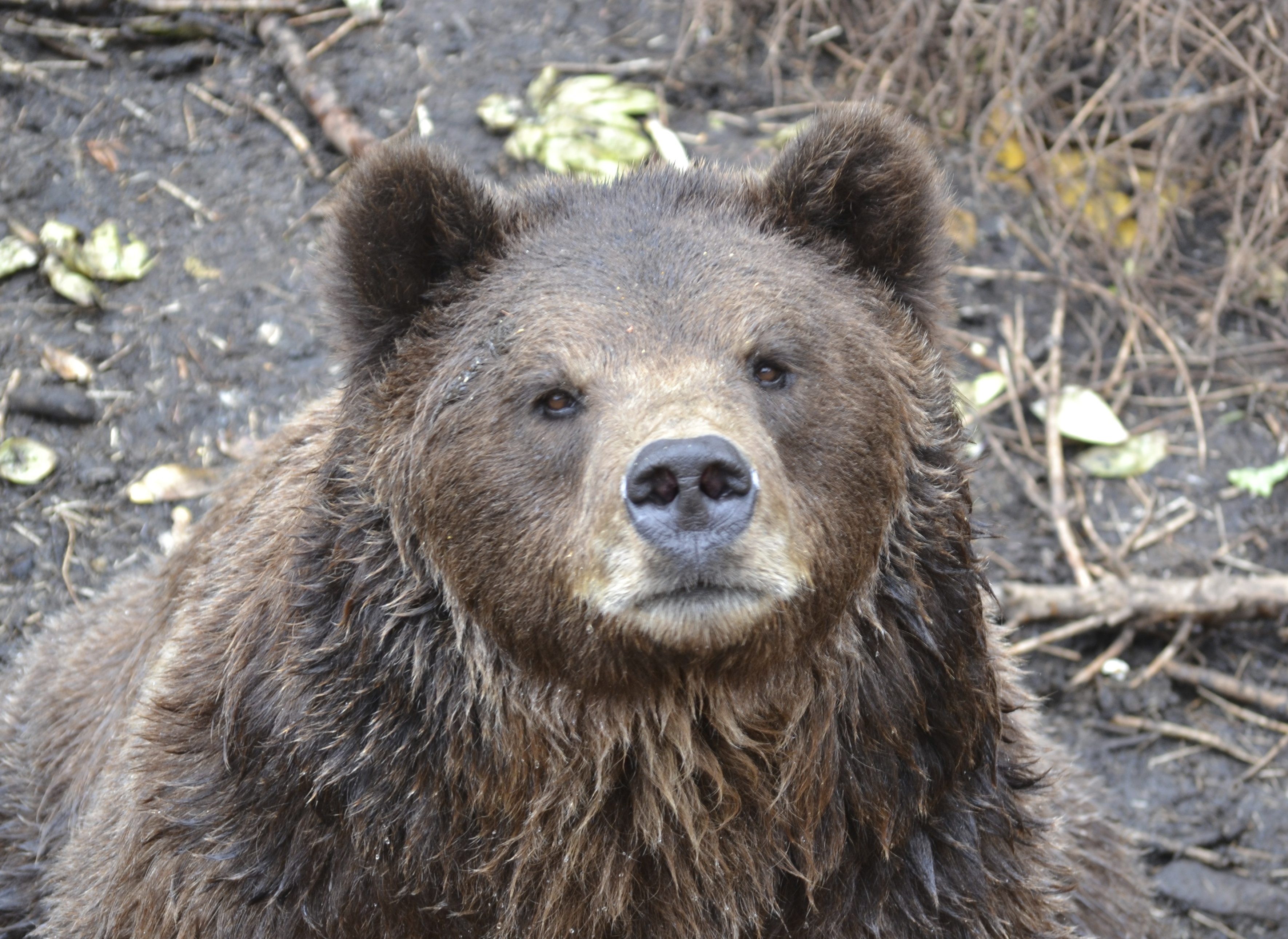
Bear trying to be a Sea Otter?

Bear trying to be a Sea Otter?

Toby at The Sitka Bear Fortress

Toby at The Sitka Bear Fortress

Eagle at The Raptor Center

Eagle at The Raptor Center

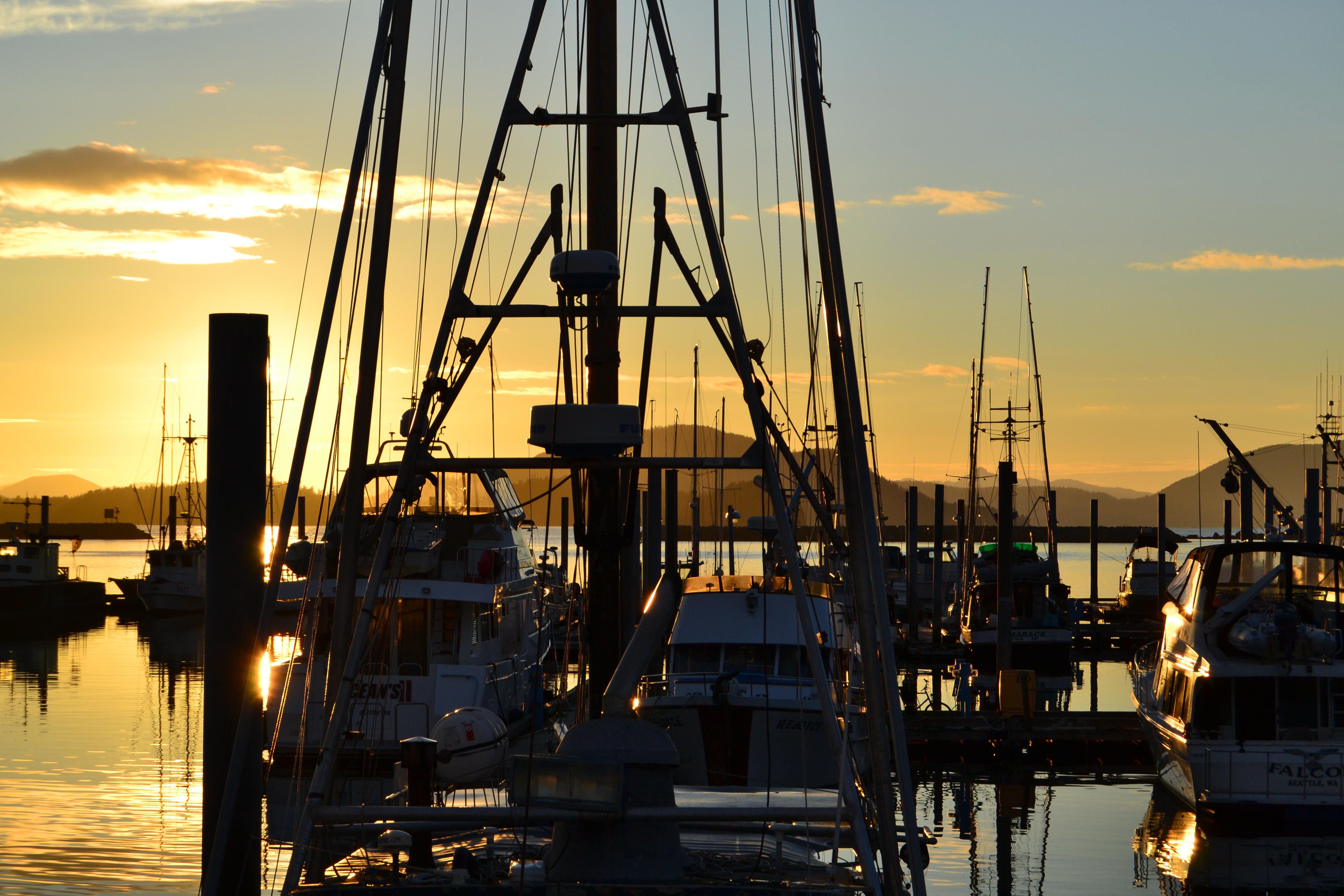
Sunset from Eliason Harbor

Sunset from Eliason Harbor

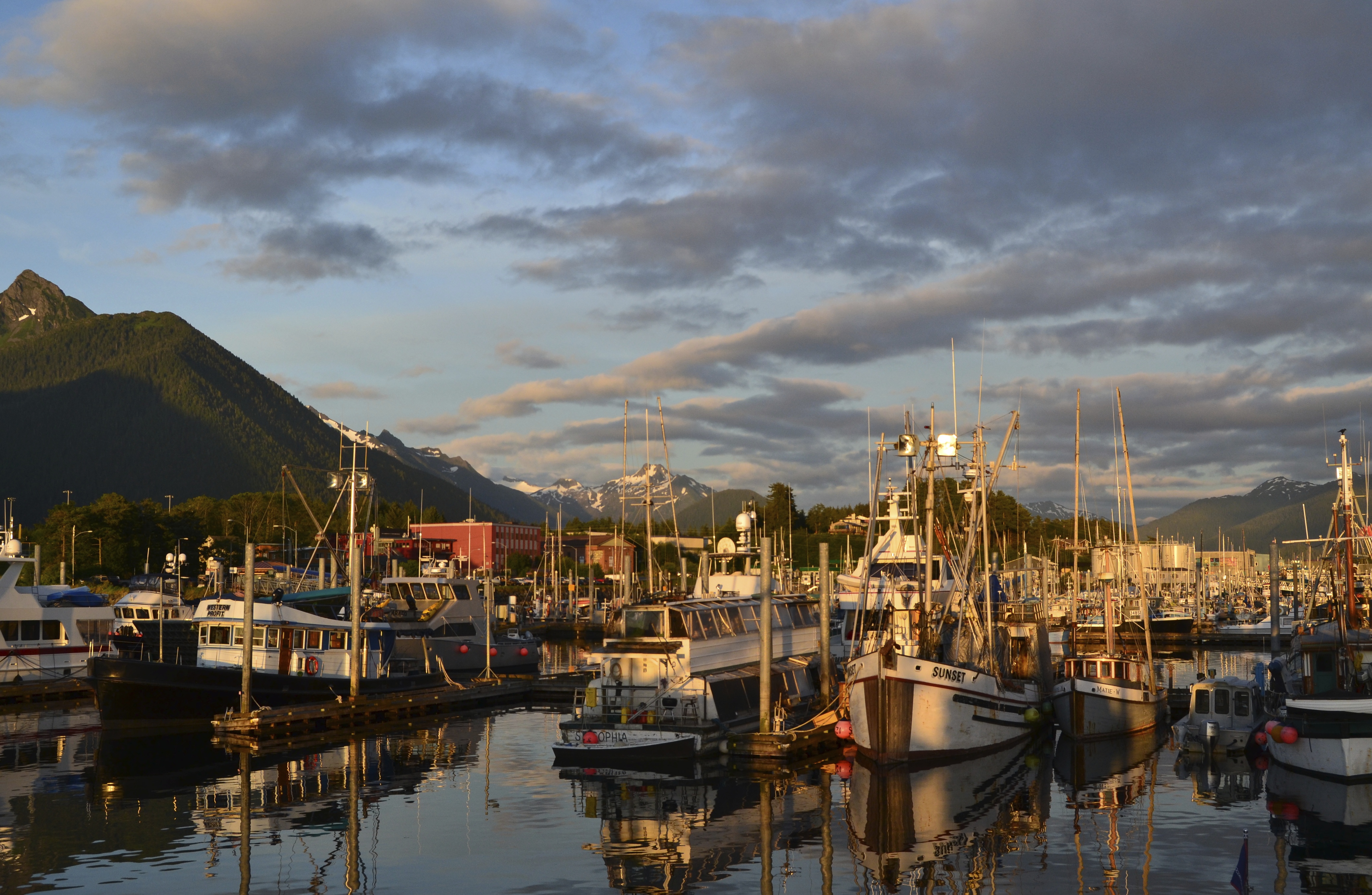
Elaison Harbor from our flybridge

Elaison Harbor from our flybridge

Sitka's beauty abounds

Sitka’s beauty abounds

The Sisters Mountains

The Sisters Mountains

July 22-26, 2013

Once the clouds lifted we realized how absolutely GORGEOUS the Sitka area is. With the beautiful jagged snow-capped mountains and many little forested islands popping up randomly around Sitka, the beauty is captivating. Sitka (Tlingit for “By the sea”) started out as a Russian settlement and was once the capital of Alaska. It is a major fishing port and it’s economy thrives on tourism. We loved watching the fishing boats coming, going, repairing and fishing and learning more about the different types of fishing.

We visited the Raptor Center which exists to rehabilitate and care for injured birds of prey, some of which are able to be released back into the wild while some are too damaged to ever leave. It was inspiring to see what this community has done for these birds. Raptors are birds of prey with three distinct features that make them different from other birds of prey: keen eyesight, a sharp curved beak and sharp talons on their feet. Raptors include bald eagles, owls, peregrine falcons, hawks, osprey and kites. Some interesting facts: eagles can soar up 10,000 feet; the peregrine falcon is the fasted animal on the planet-they can dive up to 200 mph; bald eagles have more than 7,000 feathers which weigh more than the rest of the bird; owls can rotate their head 270 degrees which is necessary because their eyes are fixed in their sockets.

We also visited the Fortress of the Bear where someone in this caring community wanted to ensure that orphaned cubs had a safe place to be raised and were not killed. There are two sets of bears at the Fortress, one with two brothers and a sister and one with two brothers. They have a wonderful natural outdoor habitat where visitors can watch them in a natural environment. Fortress of the Bear is the largest private recycler in Sitka, using outdated produce, dairy and bakery products from local markets along with fish from Sitka residents (such as Mary Todd Andersen who toured us all around Sitka. Thank you, Mary!). This allows the bears to be well fed with the waste used as compost, saving the city and private businesses $10,000 annually in waste disposal. It was great fun watching the bears play and use the sign language they have been taught to ask for more food.

As we leave Sitka we are starting our trek south. We have been out 62 days and every day is one of wonderment for us. We are so thankful to be experiencing this beautiful part of our country.